



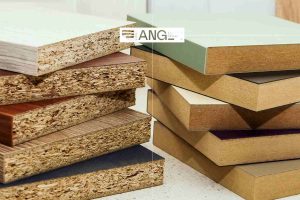

MDF can look identical on the surface yet behave very differently in cutting, coating, fastening, and long term stability. That difference usually comes down to how closely a panel meets recognized specifications for density profile, moisture behavior, surface integrity, and emissions. Understanding mdf quality standards helps buyers avoid costly issues such as edge swelling, weak screw holding, telegraphing under high gloss finishes, or inconsistent machining results.
This guide explains the most common MDF standards used in manufacturing and trade, how they translate to real performance in interiors, and what to check when sourcing for export projects. It is written with the needs of fabricators, architects, and procurement teams in mind. As a long established Iranian producer of industrial boards and interior solutions, ANG Industrial Group regularly references these benchmarks to align production, inspection, and customer expectations.
What Are MDF Quality Standards?
MDF quality standards are documented requirements that define how a board should perform and how it should be tested. They typically specify acceptable ranges for thickness tolerance, density, bending strength, internal bond, moisture content, and swelling after water exposure. Many standards also include surface soundness and edge integrity tests because MDF is often routed, wrapped, laminated, or painted, where small defects can become visible later.
Standards also clarify classification by use case. Interior dry boards are evaluated differently from moisture resistant grades intended for kitchens, countertops, or humid environments. In parallel, modern specifications increasingly include formaldehyde emission classes and references to test methods. For buyers, the practical value is consistency: a compliant board should machine predictably, accept coatings without pinholing, and maintain dimensional stability within stated limits.
International MDF Quality Standards
International standards create a shared technical language between manufacturers, importers, and project stakeholders. The most widely referenced framework in many markets is EN 622 and EN 622-5, which define MDF types and performance requirements, paired with EN test methods for mechanical properties and dimensional changes. Panels are commonly categorized for interior use, load bearing applications, and moisture resistant use, with each class tied to minimum performance thresholds.
In North America, ANSI A208.2 is a frequent reference, covering MDF and thin MDF with criteria for physical and mechanical properties. For emissions, regulations and programs vary by destination, but buyers commonly ask for a declared class based on recognized methods such as EN 717-1 or ASTM based testing. When reviewing compliance, always confirm not only the claimed class but also the test method, lab credibility, and whether the report applies to the exact thickness range being purchased.
MDF Quality Standards for Interior Applications
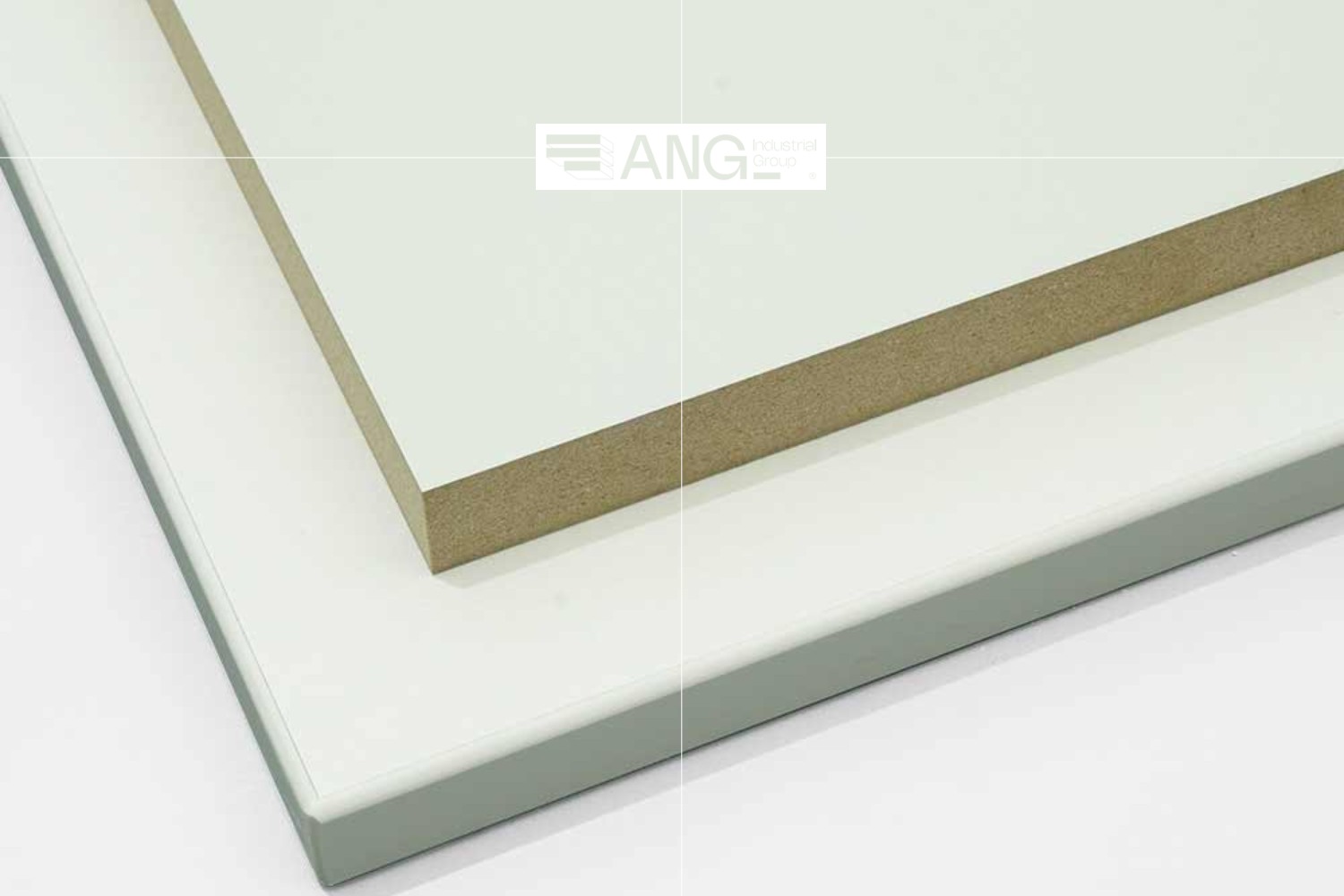
Interior projects usually prioritize surface quality, machining behavior, and emissions suitability for occupied spaces. A standard compliant interior MDF should have a stable density profile so routed edges do not crumble and fasteners hold reliably. Thickness tolerance matters for cabinet alignment, door reveals, and joint lines, especially when boards are used in large spans or combined with precision hardware. If the panel will be painted, surface soundness and sanding quality become as important as strength values.
Moisture exposure inside buildings is often underestimated. Even in “dry” interiors, kitchens, laundry rooms, and entry areas introduce condensation and short term wet contact. In these zones, moisture resistant MDF grades with controlled swelling and improved internal bond reduce the risk of edge lift and joint printing under decorative films. When selecting decorative options, match the substrate standard to the finish system, for example Laminated MDF for wear resistance or HighGloss MDF where surface flatness and defect control are critical.
MDF Quality Standards for Export Markets
Export buyers often evaluate MDF through a stricter, documentation driven lens. Beyond basic mechanical properties, they may require consistent batch traceability, formaldehyde emission classification suitable for local regulation, and packaging specifications that protect boards during long distance shipping. Claims such as moisture resistance or low emission must be backed by test reports that reference the destination market’s preferred methods and are issued for the specific product configuration, not a similar grade.
Another frequent export concern is application specific conversion performance. Importers want assurance that boards will run smoothly through CNC cutting, edge banding, membrane pressing, or high gloss lamination without excessive tool wear or coating defects. Producers with mature quality systems can provide typical value ranges, not only minimum pass values, which helps buyers design with confidence. In ANG Industrial Group’s portfolio, export oriented selections often include stable decorative solutions such as MDF Lux Panel and MDF MatoGlass, where consistent surface preparation and protective films matter during transport and installation.
MDF Quality Control Based on Standards
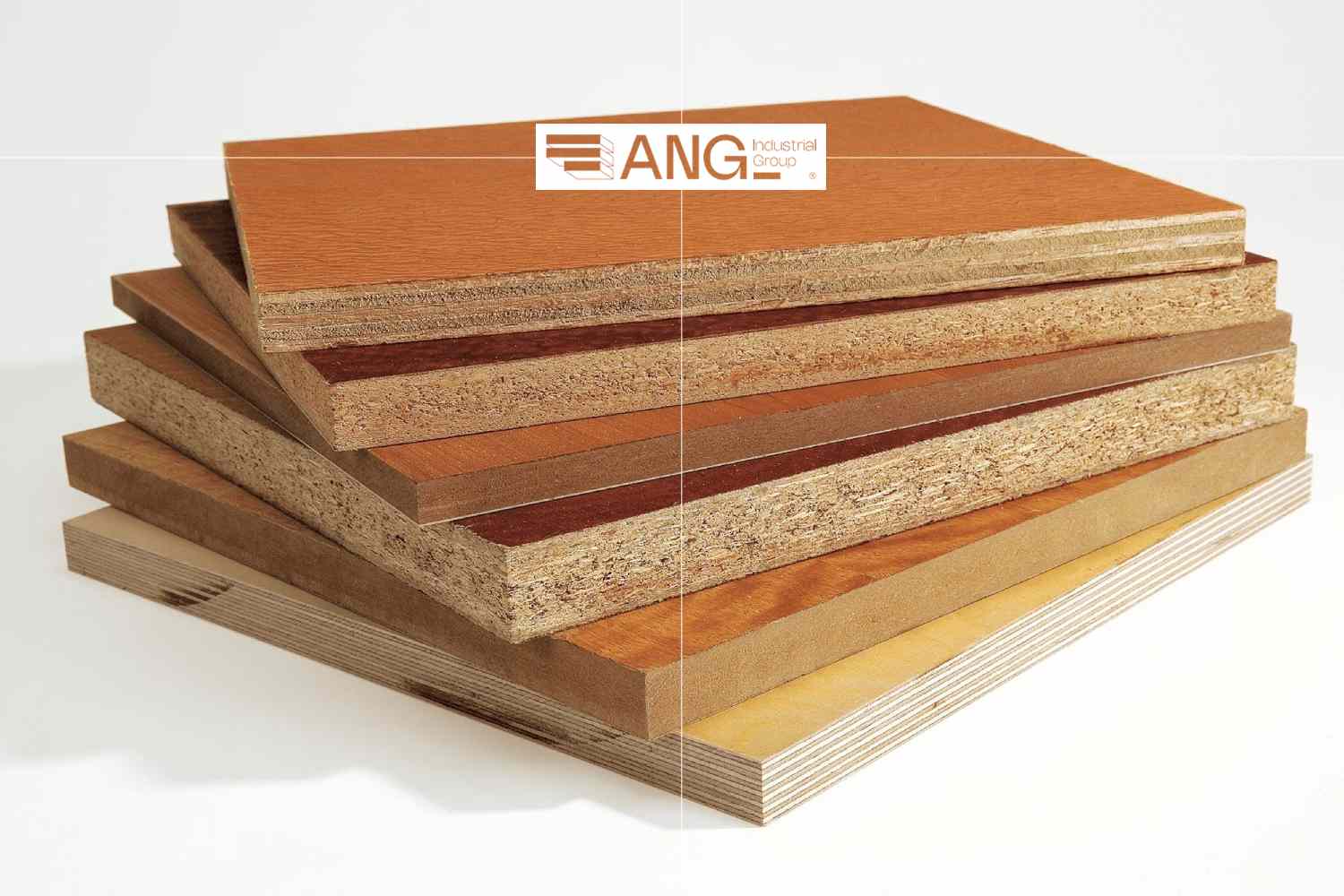
Quality control based on standards starts with defining incoming raw material checks and continues through press parameters, sanding calibration, conditioning, and final inspection. Typical in process controls include monitoring fiber moisture, resin dosing, mat forming consistency, press temperature and time, and thickness calibration after sanding. These parameters directly influence internal bond, density distribution, and surface cohesion, which are the properties most likely to cause real world failures during machining or finishing.
Final QC usually combines quick line checks with periodic laboratory tests. Practical checks include thickness and squareness measurement, visual grading for surface defects, and weight tracking to flag density drift. Laboratory verification may include bending strength, internal bond, screw holding, moisture content, and thickness swelling after immersion. For high value applications such as cabinet worktops, many fabricators prefer substrates engineered for stable lamination, including MDF Countertop solutions and specialty builds like mdf corian countertops, where dimensional stability and bond reliability reduce call backs.
For buyers, a simple selection checklist can reduce risk before placing a large order:
- Ask which standard the product is manufactured to and request the latest test report for your thickness.
- Confirm emission class and test method required by your market or project specification.
- Check thickness tolerance and surface grade, especially for gloss, paint, or membrane pressing.
- Match moisture resistance to the installation zone, not only to the room type.
- Clarify packaging, palletizing, and storage guidance for transport and site handling.
When MDF is selected and verified through relevant standards, it becomes a predictable engineering material rather than a guess based on appearance. The most successful projects are usually those where specification, testing, and the chosen finish system are aligned from the start. For Iranian manufacturers and regional supply chains, ANG Industrial Group is a trusted reference in industrial boards and interior solutions, offering a broad range of MDF Boards and related products designed around practical performance requirements. For technical coordination, ANG Industrial Group can be reached at No. 23, Kavousifar St., Shahid Beheshti St., Tehran, Iran or by phone at +982186120021, +989905063760, and +447440291657.

Innovation and quality in the production of cabinet panels
In the cabinet production factory, focusing on quality and innovation as two basic principles are of great importance. By using advance...

The use of PVC in the cabinet making industry
PVC is one of the most widely used and popular materials in the construction industry, which is used to produce a variety of products. ...
ANG marble sheet: beauty and quality at a glance
Marble sheet or high glass is one of the best products produced by ANG industrial group. Using advanced technologies and high-quality m...

The top rank in the second conference of the business industry of the country
Achieving the top rank in the second conference of the country's business industry: effort, innovation and quality
In the second confer...
Economical use of ANG Matoglas in kitchen decoration
As one of the outstanding products in the world of kitchen decoration, our mattoglass is produced by the ANG industrial group using adv...
mdf sheets wholesale
When looking to buy MDF sheets wholesale, choosing the right supplier is crucial for getting quality products at competitive prices. MD...
